
The chuppah, the ring, the seven circles, the broken glass and the words on your Ketubah: what each Jewish wedding symbol means, and where it comes from.
The short answer
The chuppah stands for the home you’re building together, open on all sides to welcome others.
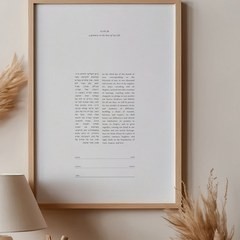
The Ketubah records your promises, and most couples now hang it as art in that new home.
A plain, unbroken ring stands for a marriage that’s whole, with nothing hidden.
Circling seven times echoes the seven days of creation.
Breaking the glass keeps a moment of memory inside the joy.
Ani L’Dodi V’Dodi Li means “I am my beloved’s and my beloved is mine.”
A Jewish wedding is full of small, deliberate details. A canopy instead of an arch. A ring with no stone. A glass wrapped in cloth, waiting on the floor.
Each one carries centuries of meaning, and knowing what they mean makes the ceremony feel more like yours. Here’s what you’ll see under the chuppah, and what each symbol says.
What are the main Jewish wedding symbols?
The main Jewish wedding symbols are the chuppah (wedding canopy), the Ketubah (marriage contract), the ring, the seven circles, the two cups of wine with the seven blessings, and the breaking of the glass. Customs vary between communities, but most ceremonies include most of them (Reform Judaism).
Here they are in the order you’ll usually see them:
Symbol | When you’ll see it | What it means |
|---|---|---|
Ketubah | Signed before the ceremony | The promises the couple make to each other |
Bedeken (veiling) | Just before the chuppah | Seeing your partner for who they truly are |
Kittel | Worn by the groom under the chuppah | Purity and a fresh start |
Chuppah | Throughout the ceremony | The couple’s new home, open to everyone they love |
Circling | As the couple arrives at the chuppah | The seven days of creation |
Ring | The betrothal | Wholeness, with its value plain to see |
Two cups of wine | The betrothal and the seven blessings | Joy, and two stages of marriage that were once separate |
Sheva brachot | The second half of the ceremony | Seven blessings, from creation to the couple’s joy |
Breaking the glass | The last moment under the chuppah | Remembering loss, even at the height of joy |
Yichud | Straight after the ceremony | The couple’s first moments alone as a married couple |
What does the chuppah symbolize?
The chuppah symbolizes the home a couple will build together. It’s a cloth held up on four poles and left open on all sides, a sign that family and friends will always be welcome (Reform Judaism).
Many couples stand under the open sky, a custom that recalls God’s promise that Abraham’s descendants would be as many as the stars (Chabad). Some use a tallit, a prayer shawl that belonged to a parent or grandparent, as the canopy. It’s one of the simplest ways to bring family history into the ceremony.
Why is the Ketubah a symbol, not just a contract?
The Ketubah is a symbol because couples turned a legal document into art. It sets out the commitments of marriage and is signed by two witnesses before the ceremony. But marriage matters so much in Jewish life that people began decorating it centuries ago, and it became something to display.
Today many Ketubah texts describe the couple’s promise to care for each other and build a home together. Our guide what is a Ketubah? covers its history, and most couples now frame their Ketubah and hang it where they’ll see it every day.
Why is a Jewish wedding ring a plain band?
A Jewish wedding ring is traditionally a plain, solid band with no stones or engraving, so its value is clear to the person receiving it. A gemstone could be worth more or less than it looks, and traditional Jewish law wants no doubt about what’s being given (Chabad).
The shape carries meaning too. An unbroken circle stands for the wholeness of marriage. Many people also wear an engagement ring with a stone; it simply isn’t the ring used under the chuppah.
Why does one partner circle the other seven times?
In many Ashkenazi weddings, one partner walks around the other seven times on arriving at the chuppah. Seven recalls the seven days of creation, a reminder that marriage is something you create together (Reform Judaism).
Traditionally the bride circles the groom, building what Chabad describes as an invisible wall around the marriage. Many couples today circle each other three times each, then walk the seventh circle together.
What do the wine and the seven blessings mean?
Wine stands for joy, and it’s used twice under the chuppah. The first cup goes with the betrothal blessings and the second with the sheva brachot, the seven blessings. There are two cups because betrothal and marriage were once two separate ceremonies, often held a year apart.
The seven blessings move from the fruit of the vine and the creation of the world to the happiness of the couple themselves. Many couples invite seven people they love to read one blessing each.
Why do you break a glass at a Jewish wedding?
You break a glass at a Jewish wedding to keep a moment of memory inside the celebration. The Talmud tells of a rabbi who smashed an expensive cup at his son’s wedding to calm guests who had grown too merry (Berakhot 31a). By the Middle Ages it had become a way to remember the destruction of the Temple in Jerusalem (My Jewish Learning).
Many couples also read it as a reminder that love is fragile and worth caring for. Then everyone shouts “Mazel tov!” and the celebration begins.
What does “Ani L’Dodi V’Dodi Li” mean?
Ani L’Dodi V’Dodi Li means “I am my beloved’s and my beloved is mine.” It comes from the Song of Songs, chapter 6, verse 3 (Sefaria), a book of love poetry traditionally attributed to King Solomon.
It’s one of the most loved lines for a Ketubah, a wedding band or an invitation, because it describes a love that goes both ways. An earlier verse, Song of Songs 2:16, turns it around: “My beloved is mine and I am his.” The first letters of the four Hebrew words also spell Elul, the month before Rosh Hashanah.
Which symbols appear in Ketubah art?
Traditional Ketubah art is full of symbols. The most common include:
Pomegranates, said to hold 613 seeds, one for each commandment in the Torah, and a sign of fruitfulness (Reform Judaism).
Jerusalem, the city couples promise to remember, the same idea as the broken glass.
The tree of life, an image of the Torah and of a family growing.
The chuppah, often drawn above the couple’s names.
Verses from the Song of Songs, above all Ani L’Dodi V’Dodi Li.
Our designs are modern and minimal, so the symbolism lives mostly in the words. You choose your text, and we can set a line like Ani L’Dodi V’Dodi Li in Hebrew and English. Our guide to Ketubah text examples compares the main texts side by side.
How can you bring these symbols into your own ceremony?
Start by choosing the traditions that matter to you, then talk them through with your rabbi or officiant. A few simple ways to make them personal:
Use a family tallit or a meaningful piece of fabric as your chuppah.
Ask seven people you love to read the seven blessings.
Keep the pieces of your glass. Some couples have them set into a mezuzah or keepsake.
Add a verse like Ani L’Dodi V’Dodi Li to your Ketubah.
Guests often wonder what each moment means. Our free ceremony guide explains them in plain words, ready to print, and our Jewish wedding glossary covers every other term you’ll hear on the day. When you’re ready, browse our designs or start designing yours.
Frequently asked questions
What is the most important symbol at a Jewish wedding?
Most rabbis would point to the ring and the Ketubah, because they carry the legal weight of the marriage in traditional Jewish law. The chuppah is the most visible symbol, though. For many couples it’s the image they remember most: standing together under one roof for the very first time.
What does the chuppah represent?
The chuppah represents the home you’ll build together. Its roof stands for shelter, and its open sides stand for hospitality, a promise that family and friends will always be welcome. Many couples hold it outdoors, under the open sky, and some use a family tallit as the canopy.
Why do Jewish people break a glass at weddings?
Breaking the glass keeps a moment of memory inside the celebration. The custom comes from a Talmudic story about a rabbi who broke a precious cup at his son’s wedding. Later it came to recall the destruction of the Temple in Jerusalem. Then everyone shouts “Mazel tov!” and celebrates.
What does Ani L’Dodi V’Dodi Li mean on a Ketubah?
It means “I am my beloved’s and my beloved is mine,” from Song of Songs 6:3. On a Ketubah it describes a love that goes both ways, with each partner belonging to the other. It suits every couple, which is why it’s one of the most popular verses in Jewish wedding art.
Why does the bride circle the groom seven times?
In Ashkenazi tradition, the bride circles the groom seven times, recalling the seven days of creation and the new world a couple builds together. Some see it as a protective circle around the marriage. Many couples today circle each other three times each, then complete the seventh circle together.
Can we include Jewish symbols in an interfaith wedding?
Yes. Many interfaith couples stand under a chuppah, break a glass and sign a Ketubah, choosing an interfaith text that reflects both families. Talk to your officiant about which rituals feel right for you. We offer interfaith Ketubah texts in Hebrew and English, with translation included in every order.


